You Can Question The Doubt Instead Of Solving It.
An obsessional doubt can feel completely convincing, even when nothing in front of you supports it. You may recognize that the doubt doesn’t fit with what you can actually observe, but that has not stopped the checking, the reviewing, or asking someone else to confirm that everything is fine. I-CBT can help you understand how an obsessional doubt takes hold in the first place, so you can stop treating it like a problem you need to solve and start giving it less space.
You Want to Understand Why the Doubt Feels Real.
You may already recognize checking, reviewing, or reassurance-seeking as part of OCD. What can be harder to understand is why a possibility that starts with “what if?” can feel more convincing than what you can actually see and know in the moment. I-CBT can help you trace that shift and understand the reasoning that gave the doubt so much weight in the first place.
We can slow the doubt down and look at how it became convincing.
This can fit you if you’re analytical, willing to look closely at your own thinking, and more interested in specific questions than in another round of reassurance. I explain what I notice, help you examine how the doubt was built, and work with you to distinguish what is imagined from what is actually supported by the situation in front of you.
We Can Understand What Made the Doubt Feel Convincing.
Inference-Based CBT may be worth considering if you:
We Follow the Reasoning That Turned Possibility Into Doubt.
Inference-Based Cognitive Behavioral Therapy is a specialized form of CBT for OCD. Instead of trying to resolve the obsessional doubt, we use concrete examples from your week to look closely at how the mind moved away from direct information and toward an imagined possibility. I ask questions that help us separate what is happening now from what OCD says could be happening, so the reasoning behind the doubt becomes easier to see … and the doubt can begin to carry less weight.
I offer both I-CBT and ERP, but use them as distinct approaches rather than combining the two. We’ll consider your symptoms, previous treatment experiences, and preferences to decide which approach makes the most sense for you.
A Consultation Can Help Us Decide Whether I-CBT Fits
I Will Tell You What I Notice And Why.
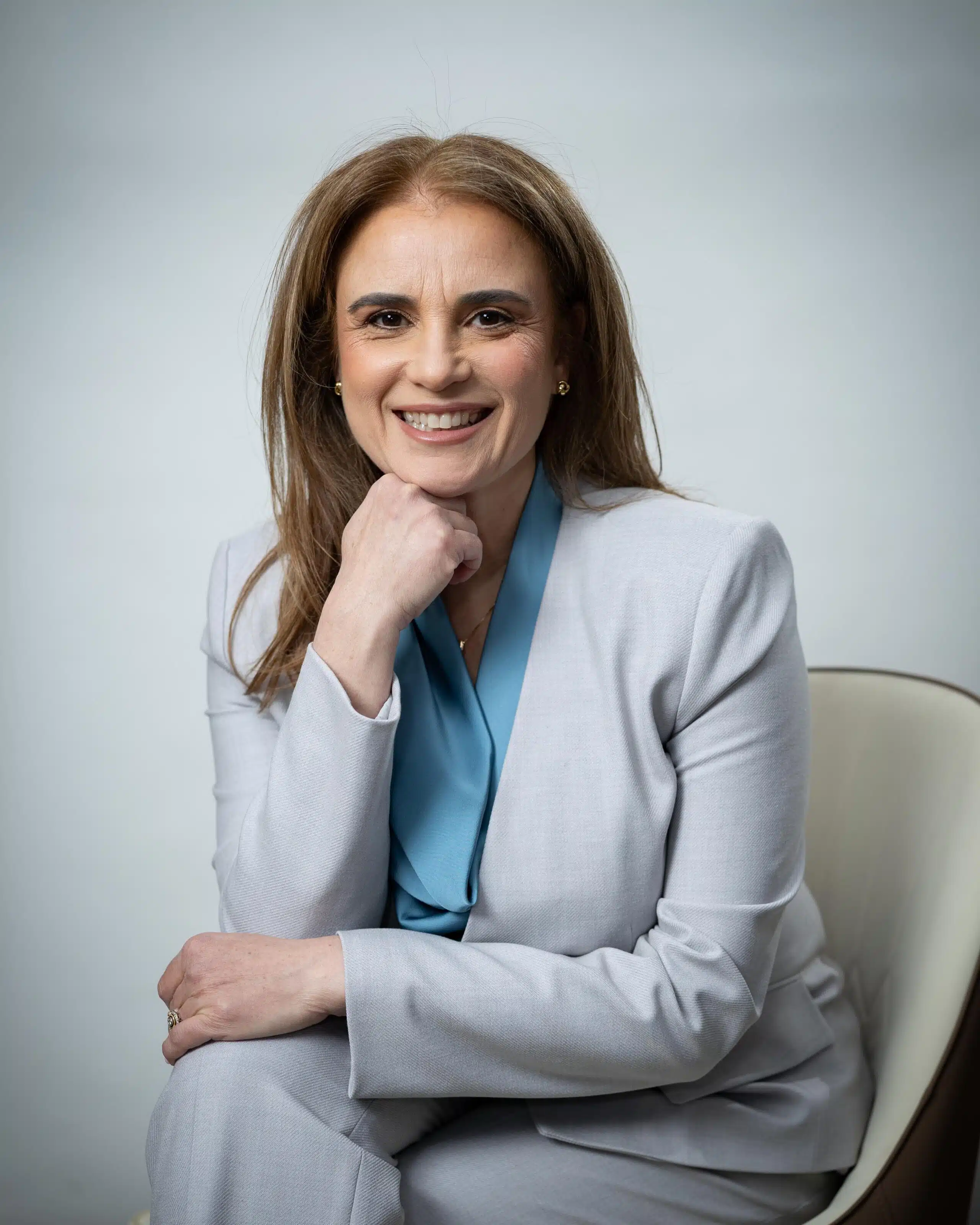
I’m Dr. Nellie Harari, a licensed clinical psychologist with advanced training in I-CBT for OCD. I tend to connect well with adults who think carefully about their lives and want more than a place to talk. I ask questions that help us tease apart what you are thinking and feeling, consider another perspective, and decide what you want to change. I will tell you what I notice and suggest a direction, but anything we try follows the goals we set together.

I-CBT gives us a way to slow down and examine one obsessional doubt at a time. The examples below describe the kinds of questions and exercises I may use, depending on the concern and the goals we have agreed on.
We begin with a recent moment when a possibility started to feel urgent. You describe what happened, what you noticed, what the doubt claimed, and what you did next. Staying with one example helps us see the reasoning clearly without turning the conversation into a broad review of every OCD concern.
Next, we look at the reasoning that made the possibility seem relevant. A doubt may draw on assumptions, past experiences, hypothetical explanations, imagined scenarios, or selected details that seem to support it. We follow that reasoning carefully to understand how you arrived at a conclusion that went beyond the information available in the situation.
We look at the difference between what your senses and the situation are telling you and what imagination or reasoning has added. The goal is not to prove that a feared possibility could never happen. It is to recognize when an imagined possibility has begun to carry more authority than the information available to you in the here and now.
Some doubts depend on rules such as needing to remember perfectly, preventing every possible mistake, or feeling completely certain before moving on. We look at where the rule appears and whether it matches the way you reason in ordinary situations. This can make the OCD rule easier to recognize before you follow it.
I often suggest an exercise that follows what we discussed in the appointment. You might record the moment a doubt begins, note the information available, or identify the imagined explanation that entered next. If the exercise is too demanding or does not fit your week, we discuss what got in the way and adjust it.

The subject of the doubt can change, while the shift from information available in the here and now to an imagined possibility remains similar. These examples show how that reasoning can appear across different OCD themes.
You may remember locking the door and still wonder whether the memory is reliable enough. The mind adds reasons the memory might not be trustworthy, making an imagined possibility feel relevant despite what you already know about the situation. I-CBT examines how that doubt was built so you can recognize when imagination has begun to override the information available to you.
A surface may look clean, but the mind introduces a chain of possibilities about what could have touched it. The concern can then feel more relevant than the information available through sight, touch, or context. I-CBT examines how that imagined sequence gained authority and how you can return to ordinary reasoning in the present moment.
An unwanted thought or image may lead to a question such as, “What if having this thought means I could actually do it?” OCD can then build a story around that possibility, making you question what the thought says about you or what you might be capable of. I-CBT helps you examine how that doubt developed and separate the fact that a thought occurred from the meaning OCD gives it.
A normal change in mood or a small disagreement can become the starting point for repeated questions about a relationship. The mind collects possibilities and treats them as proof that something must be wrong. I-CBT can help you compare that imagined account with the fuller information available in the relationship, without demanding a permanent feeling of certainty.
After the free consultation, the first appointment is a 45-minute initial consultation focused on understanding what has been happening and what you want to change.
By the end, you should have a clearer picture of how I understand the concern, what I would recommend, and whether you want to schedule another appointment.
You Can Ask How I-CBT Would Apply to Your OCD Concerns

We start by exploring what’s going on beneath the surface so we can understand what’s driving your challenges.

Together, we connect the dots between your thoughts, emotions and behaviors to discover the meanings you place on distressing events in your life.

You’ll learn and try out new ways of thinking, feeling, and responding that support lasting,
healthy change.

We focus on deepening your growth and helping you carry what you’ve learned into everyday life with confidence and clarity.

Inference-Based Cognitive Behavioral Therapy (I-CBT) is a specialized therapy for Obsessive-Compulsive Disorder (OCD). It focuses on inferential confusion, which happens when an imagined possibility begins to feel more credible than present sensory information. I-CBT follows the reasoning behind obsessions and compulsions, then helps you return to direct evidence and ordinary judgment.
I-CBT traces the reasoning that gives an obsessive concern its authority. We look at the facts, personal experiences, personal rules, hearsay, or hypothetical scenarios that make an explanation feel urgent. Then we compare that explanation with direct evidence and the way you would usually reason outside the OCD concern. The goal is to help the repeated question carry less influence without creating another reassurance rule.
Inferential confusion is the I-CBT term for a shift in which imagination begins to outweigh present reality. A possibility can feel like evidence even when sensory information points elsewhere. Therapy identifies when that shift occurs, examines the story attached to it, and compares it with the information available in the current situation.
I-CBT and exposure-based therapies address different parts of an OCD pattern. I-CBT focuses on the reasoning that makes a feared possibility believable. Exposure and Response Prevention (ERP) focuses on approaching a feared cue and changing the compulsion that follows. Nellie is trained in I-CBT and ERP and may use either approach after discussing your concerns, goals, and what you feel prepared to try.
An I-CBT session usually starts with a specific OCD moment from your week. We separate what you observed from what you imagined and follow the assumptions that made the concern feel believable. Nellie may ask you to compare the OCD explanation with an ordinary reading of the same situation and agree on a short exercise for the week.
Official I-CBT materials are organized into 12 modules. Appointments with Nellie are individualized, so she may follow the sequence closely or use selected material based on your goals. The pathway covers the topics below.
Early modules map how an imagined possibility begins to outweigh direct perception.
These modules explore the reasoning and personal rules that can make an imagined possibility feel convincing, even when it is not supported by what is happening in the here and now.
This material considers the feared identity OCD suggests and why possibility can demand action.
Later modules strengthen attention to sensory information and a reality-based account.
Adults learn to identify OCD’s reasoning tricks and return to what they know about themselves.
The final material prepares for setbacks and supports continued change.
I-CBT is an evidence-based treatment for OCD, with clinical trials showing meaningful reductions in OCD symptoms. Research continues to examine how its effectiveness compares with other established OCD treatments and which people may benefit most from the approach. As with any therapy, results vary, and no treatment can guarantee that intrusive thoughts will disappear. Treatment fit, goals, participation, and individual symptoms can all influence outcomes.
I-CBT can address reasoning patterns across OCD themes involving contamination, harm, relationships, morality, scrupulosity, responsibility, mistakes, symmetry, or the need for something to feel exactly right. Relationship OCD, sometimes called ROCD, may begin when a change in feeling or an ordinary disagreement leads to an imagined explanation. Therapy follows the reasoning that makes the possibility feel relevant.
OCD can occur alongside other concerns, but I-CBT at New Heights CBT is used specifically for obsessional doubt. If worry extends beyond OCD, generalized anxiety disorder or broader anxiety may need its own focus. Persistent low mood may call for attention to depression, and ongoing sleep difficulty may be addressed through insomnia therapy. Nellie separates these concerns with you instead of assuming every symptom has the same source.
I-CBT may be a good fit if you like working through specific questions and want to understand how an OCD doubt became convincing in the first place. It may be especially appealing if you tend to get caught in elaborate “what if” scenarios, repeatedly question information that initially seemed clear, or want to understand the reasoning that keeps bringing you back to the same doubt. I-CBT is a focused, collaborative approach, and our consultation can help us decide whether it fits the way you experience OCD and what you want from treatment.
Look for a licensed mental health professional who can explain their I-CBT training, experience with OCD, and use of the 12-module treatment pathway. Ask how they decide whether I-CBT or ERP is a good fit for you. Directory information may be self-reported, so verify credentials directly. Nellie Harari is a licensed clinical psychologist with advanced training in I-CBT for OCD. She offers in-person appointments in Brooklyn Heights and online appointments throughout New York State.
The two-volume Resolving OCD series offers self-help exercises based on I-CBT, covering concepts such as obsessional doubt, imagination and reality, the feared possible self, the OCD bubble, and reality sensing. New Heights CBT does not routinely require the books as part of treatment, although Nellie may recommend a particular reading, exercise, or worksheet when it fits the work you are doing together. If a resource is likely to be useful, she will explain how it connects to your treatment and how she suggests using it.
The length of I-CBT depends on the OCD concerns involved, how much time they take, earlier treatment, and the goals you set. Nellie typically begins with weekly appointments and reviews the plan as therapy continues. Sessions are 45 minutes. A fixed number of appointments cannot predict what one adult will need.
Yes. Nellie offers online Inference-Based CBT to adults throughout New York State through a secure video platform. In-person appointments are available at 26 Court Street, Suite 600, in Brooklyn Heights. The office is close to Borough Hall and Court Street Station and is convenient for adults coming from Cobble Hill, DUMBO, and Boerum Hill.
A free 15-minute consultation is the first step. We’ll talk through what the doubt has been asking of you, I’ll share how I-CBT works, and together we’ll figure out whether this is the right fit. You don’t need to have it figured out beforehand.