On the outside, you’re doing fine. Inside, you’re waiting for the next panic attack. That can change.
My panic attack ended in minutes. I spent the rest of the day dreading another.
Maybe it started on an ordinary evening. Your heart began to race, your chest tightened, and you were sure you were having a heart attack or about to pass out. It passed within minutes, but it left you shaken. Since then, you might notice every change in your breathing or heartbeat and wonder whether another attack is starting.
It’s understandable to fear another experience like that. But you don’t have to keep living in anticipation of it.
Fear like this tends to make you avoid whatever might bring on another attack. You might start avoiding places that feel crowded, leave events early, or only go out when someone you trust is with you. Each choice brings relief in the moment, but over time the list of things you avoid gets longer. You may have already tried breathing exercises or pushing through. What you want now is to feel less afraid, so you can make plans without worrying about the next attack.
First we’ll understand what triggers your panic, then slowly face what you’ve been avoiding.
I usually start by slowing down a recent panic attack so we can see each step: the sensation you noticed, the thought that followed, the fear that built, and what you did to get through it. Once that chain is clear, it becomes easier to see why the fear keeps coming back. Avoiding a situation brings relief, but that relief can make it feel more dangerous the next time. So we work on approaching what you’ve been avoiding, gradually and at a pace you agree to. I’ll explain why I suggest each step, and I never ask anyone to do something they don’t want to do.
Together, we can:
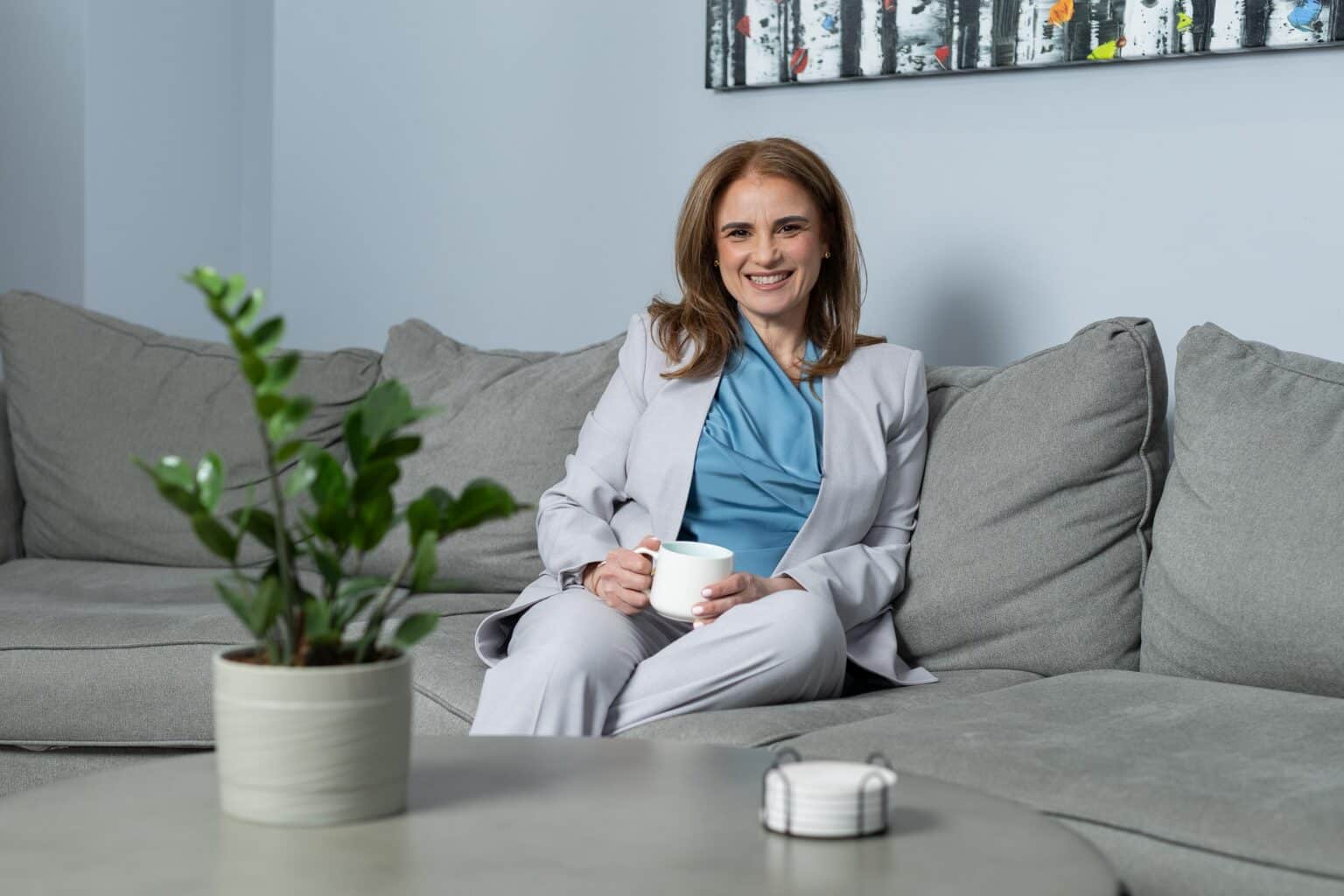
Hi, I’m Nellie Harari, PhD
I’m a licensed clinical psychologist with 20 years of experience working with adults. I love helping people figure out what’s going on when panic takes hold and why the fear keeps coming back. Many of the people I work with are thoughtful and analytical, and they often understand their panic well. What has been harder is feeling less afraid of it.
We work together on what you expect will happen during an attack and what you’ve stopped doing because of it. I push, but gently, and anything we try between sessions is decided together. If something turns out to be too hard, we talk about what got in the way and adjust it.
What I offer:
If you’re tired of planning your day around the next panic attack, let’s talk.

My approach to treating panic is grounded in cognitive behavioral therapy (CBT), including gradually facing situations and sensations you’ve come to fear or avoid. We work on understanding the patterns that keep panic going and practicing new ways to respond. Sometimes, even when you recognize that a feared thought isn’t accurate, the fear itself doesn’t go away. That’s where Acceptance and Commitment Therapy (ACT) can help. Rather than struggling to eliminate every anxious thought or sensation, you learn to make room for discomfort while continuing to do the things that matter to you.
I usually start with CBT. Panic tends to follow a predictable chain: a sensation appears, your mind reads it as a sign of danger, and the alarm that follows makes the sensation stronger. Dizziness, for example, can quickly turn into the thought that you are about to faint. In CBT, we slow that chain down, separate the thought from the feeling, and look at whether the prediction holds up. Writing the thought down close to the moment helps, because it shows us exactly what the fear is telling you.
What this looks like in sessions:
In exposure therapy, we approach what you’ve been avoiding gradually, starting with something challenging but manageable. If the fear is about your body, we may bring on sensations like a faster heartbeat on purpose, so you can see how they rise and settle on their own. We plan each step together and talk about what you learned before moving on.
This can include:
Sometimes, even when you recognize that your fears aren’t supported by the facts, the feeling of dread remains. That’s where ACT can help. Rather than struggling to get rid of fear, you can learn to make room for it without letting it dictate your choices. As you change how you respond to anxiety, it can begin to feel less overwhelming and less in control of your life. Together, we’ll focus on what matters to you, whether that’s spending time with friends, making plans, or trying something new, and work toward doing those things even when some anxiety is still present.
In sessions, we may:
You can feel the fear and still do what matters to you. I’ll help you practice.

The impact of panic often extends well beyond the attacks themselves. You may find yourself monitoring every change in your body, avoiding places or activities you once enjoyed, struggling to sleep, or criticizing yourself after an attack. Over time, the fear of another panic attack can begin to shape your choices, even on days when no attack occurs.
A change in your breathing or a sudden wave of dizziness may prompt you to check your pulse or search your symptoms online. You feel reassured for a moment, but soon another sensation catches your attention, and the worry starts again. In therapy, we’ll explore what you fear these sensations might mean and how repeated checking can keep you focused on the possibility of another attack. We’ll work on responding differently to these sensations without automatically treating them as signs of danger. If your doctor has recommended monitoring certain symptoms, we’ll respect that guidance and coordinate any changes with your medical provider.
You may only feel comfortable making plans if someone you trust comes along or you know exactly how you could leave. This fear can overlap with agoraphobia, and over time, more places and activities may begin to feel off-limits. Having someone nearby or knowing there’s an exit can bring relief in the moment, but relying on these precautions may also keep the fear going. In therapy, we’ll explore how these patterns affect your freedom and gradually work toward doing more of what matters to you, even when you can’t be certain that panic won’t happen.
Waking suddenly in the middle of a panic attack can make bedtime feel risky, even when you’re exhausted. You may find yourself lying awake, monitoring your heartbeat or breathing, and worrying that another attack might happen while you’re asleep. In therapy, we’ll explore how that fear affects your sleep, what happens when you wake during the night, and whether staying alert is making it harder to settle.
After a panic attack, you might find yourself replaying who noticed or feel embarrassed that you needed help. The way you talk to yourself afterward matters. Harsh self-criticism can add another layer of distress and make the possibility of another attack feel even more threatening. If you hold yourself to the standard of always appearing calm and in control, perfectionism therapy can help us examine those expectations as well.
After an attack, you might feel too drained to concentrate or enjoy anything else that day. We can look at how often this happens and what helps you recover. If low mood or loss of interest continues between attacks, depression therapy may help. If ongoing demands leave you depleted even on days without panic, burnout therapy can address that pressure.
Having a single panic attack doesn’t necessarily mean you have panic disorder. The distinction depends on whether attacks occur unexpectedly, whether you develop ongoing worry about having another one, and how much that fear changes your behavior or interferes with everyday life.
Panic attacks are sudden surges of intense fear or discomfort. Possible symptoms include:
Having a panic attack does not automatically mean you have panic disorder. We look at the wider pattern:
Panic attacks can cause intense physical symptoms, including a racing heart, chest tightness, dizziness, and shortness of breath. Because these symptoms can also occur with medical conditions, it’s important not to assume that every episode is caused by panic, even if you’ve experienced panic attacks before.
You may come in having already thought a lot about your panic, or not knowing where to start. Either way, you don’t need to have it worked out. The first appointment is 45 minutes, and we won’t start any exposure exercises yet. In this first meeting, we will:
You don’t need to have it all figured out. We can start by understanding what’s happening.
People use “anxiety attack” to describe several experiences, from building worry to a sudden episode of panic. It isn’t a formal clinical term. A panic attack is more specific: a sudden rush of intense fear with physical symptoms like a racing heart or shortness of breath.
When we talk about your experience, I’d ask how quickly the episode began, what happened before it, and how you felt afterward. Panic attacks can occur with several anxiety disorders, including social anxiety disorder, so the broader pattern is important. You don’t need to know which term best describes your experience before reaching out. Many people I see deal with both anxiety and panic attacks, and we can work on both.
Some panic attacks happen in certain situations you’ve come to fear, like riding an elevator or being in other enclosed spaces. Others seem to come out of nowhere, on an ordinary afternoon or even in your sleep. Knowing what set off one attack doesn’t fully explain why panic keeps coming back, though.
When we look at your attacks together, I’ll usually ask about:
There’s no single cause of panic disorder. Family history, biology, and what’s happening in your life can all play a part, so we focus on what’s relevant to you.
Panic attacks often rise quickly and peak within minutes. Many attacks settle within 5 to 20 minutes, though some last longer, and you may feel shaky or tired for a while afterward.
If it feels like panic lasts for hours, I’ll ask whether the fear stays at the same level or comes in waves. Sometimes it’s the worry after the attack that lingers, and that’s something we can work on too.
Some people experience panic attacks every day, and living with that level of fear and uncertainty can be exhausting. Although frequent panic attacks can occur, they’re not something you simply have to learn to live with. Effective treatment can help.
Therapy can address both the panic attacks themselves and the ongoing worry about when another one might happen. Even if you’re managing to go to work, meet your responsibilities, and appear fine to others, the effort involved can take a toll. The activities you avoid, the plans you turn down, and the energy you spend anticipating another attack all deserve attention.
Yes. CBT for panic attacks helps you change how you understand and respond to physical sensations, even when those sensations seem to come out of nowhere. A racing heart, shortness of breath, or a choking sensation can feel frightening, especially when you interpret them as signs that something is seriously wrong.
These physical sensations are real. In therapy, we’ll explore what you fear they might mean, how those interpretations can intensify panic, and how to respond differently. Treatment may also involve gradually becoming more comfortable with the sensations themselves, so they no longer feel as threatening. If you’re experiencing new or unexplained physical symptoms, it’s important to have them medically evaluated rather than assuming they’re caused by panic.
Yes. Breathing exercises, relaxation techniques, and mindfulness can help, but they don’t always change the fear underneath. If a coping skill didn’t bring enough relief, that doesn’t mean therapy won’t help.
I’ll ask what you’ve tried and what you hoped each one would do. Sometimes a coping skill quietly becomes another rule, like only leaving home once every sensation has settled. We keep what helps and look closely at anything that has been holding you back.
Cognitive behavioral therapy (CBT) has strong research support as a way to treat panic disorder. It’s a type of talk therapy that looks at the frightening thoughts and habits that keep panic attacks coming back. For some people, medication is also part of treatment.
CBT is my main approach, and I bring in ACT when it helps. Your plan is built around what you’re dealing with, what you’ve already tried, and how things change over time. If you take medication or are thinking about it, those decisions stay with your prescriber, and therapy can work alongside that care.
Exposure therapy is one of the main ways CBT works with the cycle of panic and avoidance. We plan small steps toward something you’ve been avoiding, so you can find out what actually happens instead of relying on the prediction “If I panic, I won’t cope.” We also look at that prediction directly, using a CBT technique called cognitive restructuring.
We decide together what you’d like to get back to, why it matters, and where to start. Afterward, we talk about how it went. If a step feels like too much, you can tell me, and we’ll change the plan.
If your symptoms are new, severe, or different from what you’ve experienced before, seek medical attention rather than assuming it’s panic. If you recognize the symptoms as part of a familiar panic attack, there are ways to respond without adding to the fear.
You might:
No technique makes an attack stop right away, and trying hard to make it disappear can add pressure. In therapy, we’ll explore which responses help you feel more confident handling panic.
It’s important to let me know if your panic attacks become more frequent or intense during treatment. Sometimes this happens as you begin facing situations or sensations you’ve been avoiding, while other times, additional stress or a treatment strategy that needs adjusting may be contributing. We’ll take the time to understand what’s happening rather than assuming that feeling worse means therapy is working.
I’ll want to know what happened, how long it lasted, and how it affected your day. Together, we’ll review your progress and decide whether to adjust the pace, modify an exercise, or reconsider part of the treatment plan.
The length of panic disorder treatment depends on your goals, what you’re dealing with, and how things change as we go. After the first appointment, I usually meet with people weekly. We check in on progress along the way instead of setting a fixed number of sessions.
Signs we pay attention to include:
Panic disorder is treatable. Some people go long stretches without attacks, and others still have them but find they are much less disruptive to their lives. Although I can’t promise you’ll never experience panic again, treatment can help you feel more confident in your ability to handle it.
If panic symptoms return, it doesn’t mean you’ve lost the progress you’ve made. We can look at what may have changed and revisit the strategies that have helped. Progress isn’t only about having fewer attacks. It can also mean spending less time worrying about the next one, feeling freer to go places on your own, and returning to your activities without letting fear dictate your choices.
Yes, I offer online therapy for panic attacks to adults throughout New York State. Online sessions work the same way as sessions in my office: we talk through your attacks, look at what you’re afraid will happen, and plan what to practice between sessions.
All you need is a private space and a reliable connection. Online sessions can make it easier to fit therapy into your week, and we can talk about in-person sessions if those suit you better.
Yes. In-person sessions are available on Wednesdays at my Brooklyn Heights office at 26 Court Street, Suite 600, near Borough Hall and Columbus Park. Many people come from nearby Cobble Hill, DUMBO, and Boerum Hill. Borough Hall/Court Street Station (2, 3, 4, 5, N, R, and W trains) is a short walk away, Jay Street-MetroTech (A, C, F, and R trains) is about five minutes away, and several bus routes stop within a block. Street parking can be limited, and nearby garages include Icon Parking at 180 Montague Street and LAZ Parking at 92 Livingston Street.
If you’re searching for a panic disorder therapist near me, it can help to ask any therapist:
Let’s start with a conversation and see if working together feels right.
A free 15-minute consultation gives us time to talk about your panic attacks and what you would like help with. We can meet by phone, Zoom, or Google Meet. I’ll explain how I work, and you can decide whether I’m the right therapist for you.
You’ve worked around panic long enough. Let’s work toward getting more of your life back.